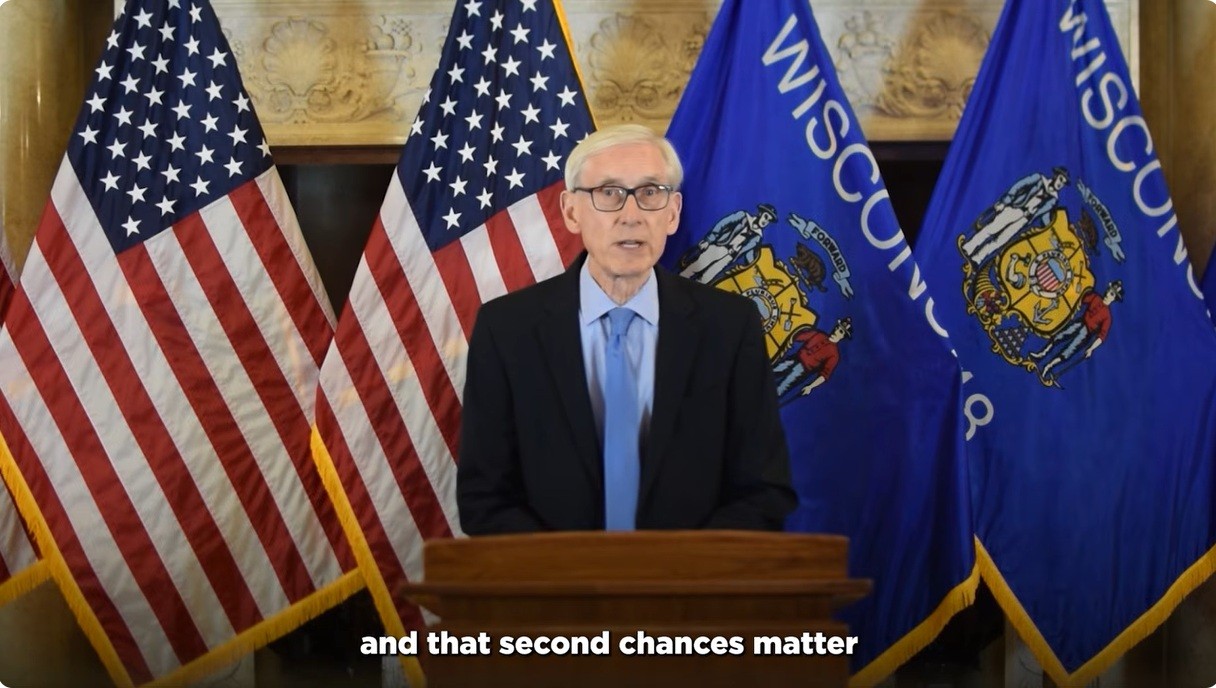
Credit: Law Forward Press Release
Brief filed on behalf of voters and advocacy groups warns that USPS mail ballot rules would disenfranchise Wisconsin voters
MADISON, Wis. — Law Forward has filed an amicus brief with the U.S. Supreme Court urging the justices to reject the Trump administration’s request to immediately implement new restrictions on mail-in voting before the November election, warning the changes would disenfranchise Wisconsin voters and throw the state’s election system into chaos. The brief, filed in Trump v. California, was submitted on behalf of the Wisconsin Democracy Campaign, EXPO of Wisconsin, and three Wisconsin voters.
The case is in response to a March 2026 executive order signed by President Trump which directs the U.S. Postal Service to accept and deliver mail-in ballots only for voters on state “citizenship lists” compiled by the federal government. U.S. District Judge Indira Talwani blocked the order’s key provisions in June, finding the president lacks constitutional authority to regulate state elections. The Trump administration then took the issue to the Supreme Court after the 1st U.S. Circuit Court of Appeals denied the administration’s request to stay Judge Talwani’s decision last week.
Law Forward’s brief argues Wisconsin’s uniquely decentralized election system, which is run through 1,850 municipal clerks, is especially vulnerable to disruption. Absentee ballots for the November election must be designed, printed and mailed by September 17, about a month after the primary, leaving little time to create new voter lists utilizing a brand new and untested system.
“Not only is there no basis for making such changes to state election law by executive order, but doing so in a rushed, haphazard fashion in the middle of an ongoing Wisconsin election threatens the unlawful disenfranchisement of Wisconsin voters,” said Rachel Snyder, Law Forward Policy Counsel. “If the order is implemented as written, it will disenfranchise lawful Wisconsin voters, create unnecessary confusion among election officials and voters alike, invite conflict over the validity of absentee ballots properly cast under Wisconsin law, violate voter privacy laws, and damage public faith in Wisconsin elections.”
Mail delays are already plaguing Wisconsin elections: 269 City of Milwaukee absentee ballots arrived a day too late to count in this April’s spring election. The challenges created by the executive order would be particularly problematic for student voters living out-of-state. The brief includes a firsthand account from a registered voter who was unable to participate in the February 2026 primary after not receiving a ballot via mail. New requirements and bureaucracy would only add to delays and risk the disenfranchisement of more eligible voters.
“Wisconsin already has appropriate mechanisms in place to continuously verify the accuracy of its voter registration list. It does not need help from the federal government,” said Nick Ramos, Executive Director, Wisconsin Democracy Campaign. “This proposal threatens the voting rights of Wisconsin’s 140,000 naturalized citizens, among other categories of voters. In a state where the results of presidential elections are often decided by fewer than 30,000 votes, unlawfully disenfranchising voters can have significant effects, including changing the outcome of the election.”
“Wisconsinites can see this for what it is — an unconstitutional effort to inject chaos into an election cycle that is already underway and restrict access to the ballot,” said Marianne Oleson, Co-Executive Director EXPO Wisconsin. “Let’s hope that the Supreme Court puts a stop to this reckless proposal.”
Law Forward’s brief can be read in full here.